
Summer Heat & Baby Sleep: The Risks
When summer heat waves hit, parents often worry about their baby's comfort during sleep. Overheating poses real risks beyond discomfort, making it crucial to keep babies cool for safety.
Infants struggle to regulate body temperature because their sweat glands are not fully developed and their higher surface area to body mass ratio means they gain heat faster. This vulnerability to overheating has been linked to an increased risk of Sudden Infant Death Syndrome (SIDS).
The American Academy of Pediatrics (AAP) and the CDC emphasize safe sleep environments, where temperature is significant. The CDC recommends a firm, flat sleep surface with only a fitted sheet to ensure adequate airflow and help keep babies cool.
Understanding these risks empowers parents to create the safest and most comfortable sleep environment for their baby.
Recognizing Overheating in Your Baby
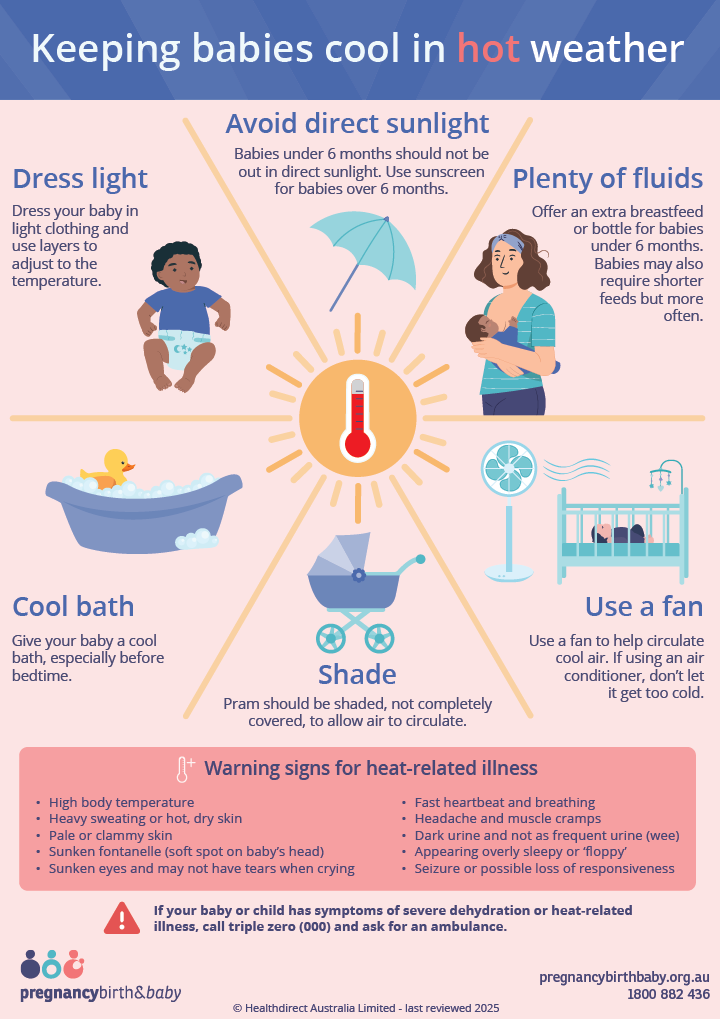
A sweaty forehead alone doesn't always signal overheating, as it can also result from normal infant sweating or a stuffy nose. Look for a cluster of symptoms for a clearer picture, paying close attention to flushed skin, especially on the chest and back.
Rapid breathing is another key sign. Observe their chest; is it rising and falling more quickly than usual? Restlessness, specifically a type of discomfort-related fussiness, can also indicate overheating. They might arch their back or seem generally unsettled even after being fed and changed. Checking where it counts – the back of their neck or chest – is more accurate than feeling their hands or feet, which often feel cool regardless.
A decrease in wet diapers signals dehydration, which can accompany overheating. If your baby isn't wetting as many diapers as usual, it's a reason for concern. Differentiate these symptoms from illness; a fever, cough, or lethargy warrant an immediate pediatrician consultation.
If you suspect your baby is overheating, move them to a cooler place, remove excess clothing, and offer fluids if age-appropriate. If their temperature is high or they have difficulty breathing, seek medical attention immediately.
- Flushed skin: Especially on the chest and back.
- Rapid breathing: Faster than usual chest movements.
- Restlessness: Discomfort-related fussiness and arching of the back.
- Warm to the touch: Back of the neck or chest.
- Decreased wet diapers: A sign of potential dehydration.
Room Temperature & Humidity: The Sweet Spot
Maintaining the right room temperature is important for comfortable and safe baby sleep. A good starting point is between 68-72°F (20-22°C), though you should adjust based on your baby’s needs and local climate.
Humidity is often overlooked, but it’s equally important. High humidity can make the room feel sticky and uncomfortable, hindering your baby’s ability to cool down through sweating. Low humidity, on the other hand, can dry out their skin. Ideally, you want to maintain a humidity level between 40-60%.
Use a thermometer and hygrometer to monitor temperature and humidity; these are inexpensive and widely available. When using a fan, avoid pointing it directly at the baby to prevent chilling or dehydration, as good air circulation is beneficial, but direct airflow is not.
Every baby is different. Some may prefer a cooler room, others the warmer end of the range. Pay attention to your baby’s cues and adjust the temperature accordingly; observing their behavior is often more valuable than relying solely on a thermometer.
Sleep Sacks: Your Summer Essential
Loose blankets pose a SIDS risk, making sleep sacks a safer alternative for keeping babies warm. For summer, consider the TOG rating when choosing a sleep sack.
TOG (Thermal Overall Grade) measures fabric breathability. For summer, choose sleep sacks with a TOG rating of 0.5-1.0, designed for warmer temperatures with better airflow. Popular brands include Kyte Baby, known for soft, breathable bamboo-derived sleep sacks, and Dreamland Baby, which offers a gentle swaddle transition system.
Kyte Baby sleep sacks are made from 100% bamboo rayon, known for moisture-wicking properties. Dreamland Baby sleep sacks use a weighted design to promote sleep; choose the appropriate weight for your baby’s age and size. Proper sizing is critical—a sleep sack that’s too big is a safety hazard, while one that’s too small is uncomfortable.
A 0.5-1.0 TOG sleep sack, with appropriate clothing, should provide warmth without overheating. Regularly check your baby's temperature and look for signs of overheating. The goal is to find the right balance.
Popular Baby Sleep Sacks: A Summer Comparison
| Brand | Material | TOG Rating | Key Features | Parent Feedback |
|---|---|---|---|---|
| Kyte Baby | Bamboo Viscose | 0.5 - 1.0 TOG | Known for exceptional softness and breathability. Simple design with a zipper closure. Wide range of colors and patterns. | Generally very positive; parents praise the softness and cooling properties. Some report zipper can be tricky initially. |
| Dreamland Baby | Spandex/Polyester Blend (Gray Whale design utilizes cooling technology) | 0.5 - 1.0 TOG | Designed with a weighted element to promote longer sleep (weight distribution is key). Offers good breathability. Zipper closure. | Parents often report success with longer sleep stretches. Some find the weight takes getting used to for baby, and it's not suitable for all babies. |
| HALO Sleepsack | 100% Cotton | 0.5 - 2.5 TOG (varies by model) | Classic sleep sack design with armholes for freedom of movement. Available in a wide range of TOG ratings for different temperatures. Often features a side zipper. | Popular and widely available. Parents appreciate the variety of TOG options. Some find the cotton isn't as naturally cooling as bamboo. |
| Kyte Baby | Bamboo Viscose | 0.5 TOG | Lightweight and exceptionally breathable, ideal for warmer temperatures. Features a footie design for full body coverage. Zipper closure. | Highly rated for summer use. Parents love the softness and cooling effect. Footies can be a pro or con depending on preference. |
| Dreamland Baby | Spandex/Polyester Blend | 0.5 TOG | Lightweight version with weighted element for calming. Designed for warmer weather. Zipper closure. | Similar positive feedback to the standard Dreamland, but specifically noted for summer comfort. Weight is a consideration. |
| HALO Sleepsack | 100% Muslin Cotton | 0.5 TOG | Very lightweight and breathable muslin cotton. Offers good airflow. Features a side zipper. | Good option for hot weather. Parents appreciate the breathability of muslin, but it may not be as durable as other materials. |
| Kyte Baby | Bamboo Viscose | 1.0 TOG | Offers a slightly warmer option for mild summer nights. Maintains the softness and breathability of the bamboo viscose. Zipper closure. | A good transitional option as temperatures fluctuate. Parents still praise the comfort. |
Qualitative comparison based on the article research brief. Confirm current product details in the official docs before making implementation choices.
Clothing Choices for Summer Sleep
What your baby wears under their sleep sack is as important as the sack itself. Focus on breathable fabrics like cotton, muslin, and linen, which allow air to circulate and help regulate body temperature. Avoid synthetic fabrics like polyester, which trap heat and moisture.
Layering is key. A simple onesie may suffice on a warm night, but have a light swaddle or receiving blanket available if needed. You can add a layer if your baby seems chilly, but cooling them down if they're already overheating is harder. In the heat, less is generally more.
Pay attention to the onesie fabric. A lightweight cotton onesie is a good choice, while a fleece onesie should be avoided during summer. Aim for a comfortable temperature, not a cozy one.
Bedtime Routine Adjustments for Summer
Your usual bedtime routine may need a slight tweak during summer. Consider a cooler bath or sponge bath before bed to help lower your baby’s body temperature, signaling it's time to wind down. A consistent wind-down routine is still important, though you might shorten it if your baby is fussy from the heat.
Dimming lights earlier cues your baby’s brain that sleep is approaching. A cool, damp washcloth on their forehead can provide temporary relief, but avoid ice packs or anything causing drastic temperature changes.
Be flexible. If your baby is uncomfortable due to heat, adjust the routine as needed. The goal is to create a calming, comfortable environment that promotes sleep, not to rigidly adhere to a schedule.
Gentle Sleep Training in the Heat
Summer discomfort can disrupt sleep training. If your baby is uncomfortable due to heat, pause sleep training and focus on keeping them cool and comfortable. Pushing through when they’re distressed is unlikely to be productive.
Gentle sleep training methods, like Babywise Mom’s "Four S’s" (Soothe, Swaddle, Shush, Swing), can be effective in summer, but may need adaptation. You might use a lighter swaddle or skip it if it's too warm. The goal is to provide comfort and support while encouraging independent sleep.
Consistency is important, but so is flexibility. Acknowledge that sleep training might be a little harder when your baby is hot and sweaty. Be patient with yourself and your baby, and remember that it’s okay to take breaks when needed. It’s a challenging time, but with a little understanding and adjustment, you can navigate it successfully.
When to Seek Professional Advice
The information provided in this article is intended for general guidance only and should not be considered a substitute for professional medical advice. If you’re concerned about your baby’s health, or if they’re experiencing persistent overheating, signs of dehydration, or difficulty breathing, contact your pediatrician immediately.
Resources like the AAP safe sleep guidelines () and the CDC’s resources on infant sleep safety are also valuable sources of information. Remember, you’re not alone, and there are plenty of resources available to help you keep your baby safe and comfortable.

No comments yet. Be the first to share your thoughts!