

Why babies resist the crib
Babies often fight the crib because the transition from your arms to a flat mattress triggers a sensory shock. In the womb and in your arms, they are warm, snug, and supported. The crib is cool, flat, and empty. This shift can trigger a panic response, making the baby feel like they are falling.
The Moro reflex, or startle reflex, exacerbates this resistance. Around the first few months, babies have an involuntary reaction to the sensation of falling. When you lay them down, this reflex causes their arms to jerk outward, often waking them immediately. It is a hardwired survival mechanism, not a behavioral choice.
Sleep associations also complicate the issue. If a baby has learned to fall asleep while being held, rocked, or fed, the crib represents a loss of that comfort. They may wake every 45 minutes during a sleep cycle, expecting the same conditions that helped them drift off. Without those cues, they do not know how to reconnect sleep stages alone.
Understanding these physical barriers helps validate your frustration. The crib is not a punishment; it is simply a different environment that requires adjustment. Addressing the temperature drop, managing the startle reflex with appropriate swaddles, and gradually changing sleep associations are the first steps to helping your baby settle.
The 40-second settling method
The "40-second method" is a targeted technique designed to capitalize on the brief window when a baby is drowsy but not yet fully asleep. Placing a baby down while they are still alert often leads to crying, while waiting too long causes overtiredness. The goal is to transition the infant from relaxation into deep sleep while in the crib, minimizing the startle reflex.
This approach combines environmental control with precise physical timing. It relies on creating a consistent sensory environment—primarily through white noise and swaddling—that mimics the womb. By layering these cues, you reduce the sensory shock of being placed in a quiet, open space. The "40 seconds" refers to the focused, calm presence you maintain immediately after setting the baby down, ensuring they feel secure as their heart rate slows.
Step 1: Pre-load the sensory environment
Before you pick up your baby, prepare the crib. Turn on a white noise machine set to a low, steady hum. The sound should mask household noises without being startling. Dim the lights significantly to signal that it is time for sleep. This ensures the environment is already aligned with sleep cues, reducing the cognitive load required to settle.
Step 2: Swaddle and hold until drowsy
Swaddle your baby snugly in a sleep sack or blanket to restrict arm movement, preventing the Moro reflex from waking them. Hold your baby upright against your chest, where they can hear your heartbeat and feel your warmth. Wait until their eyelids flutter and their limbs go limp. This is the "drowsy but awake" stage. Do not let them fall asleep in your arms; the goal is for them to feel the transition from your hold to the crib while still relaxed.
Step 3: Lower slowly and pause
Lower your baby into the crib slowly, keeping one hand on their chest or back for contact. Once their bottom touches the mattress, keep your hand there for a few seconds to provide warmth and reassurance. Do not immediately pull away. This brief contact helps them register that they are still safe and supported, even though they are no longer being held. This pause is the core of the "40-second" window—providing just enough physical reassurance to prevent panic.
Step 4: Withdraw calmly and monitor
After the brief pause, slowly remove your hand. If the baby remains still, leave the room or stand quietly nearby. If they stir, wait a moment before intervening. Immediate picking up can signal that crying leads to being held, reinforcing the behavior. Consistency in this withdrawal process teaches the baby that the crib is a safe, predictable place for sleep.
Turn on white noise and dim the lights before picking up your baby. This aligns the environment with sleep cues before the transition begins.

Swaddle snugly and hold upright until eyelids flutter. Wait for the "drowsy but awake" state to prevent falling asleep in your arms.

Lower baby slowly, keeping one hand on their chest. Pause for a few seconds on the mattress to provide warmth and reassurance.

Remove your hand slowly. If the baby stirs, wait before intervening. Consistency teaches the crib is a safe, predictable place.


As an Amazon Associate, we may earn from qualifying purchases.
Best sleep sacks for crib transitions
A sleep sack is more than just a cozy blanket substitute; it is a safety tool that helps your baby feel secure in the open space of a crib. Unlike loose bedding, which poses a suffocation risk, a wearable blanket keeps your infant warm while allowing free movement for their hips and legs. This security can be the difference between a baby who fusses and one who settles, especially when they are adjusting to the larger mattress of a crib.
When choosing a sleep sack, prioritize materials that regulate temperature. Overheating is a significant risk factor for SIDS, so look for breathable fabrics like cotton or bamboo blends. The American Academy of Pediatrics recommends keeping the nursery between 68°F and 72°F (20°C–22.2°C). A sleep sack with an appropriate TOG (thermal overall grade) rating ensures your baby stays comfortable without sweating. For warmer months, a lightweight 0.5 TOG is ideal, while cooler nights may require a 2.5 TOG or higher.
Ease of use also matters. Parents are often sleep-deprived, and a sleep sack with a two-way zipper allows for quick diaper changes without fully waking the baby. Some models feature split-leg designs that help toddlers who are learning to walk maintain their balance, making the transition from a swaddled infant to a mobile toddler smoother. Always ensure the fit is snug around the neck and arms but loose enough around the legs to prevent tripping.
The right sleep sack can signal to your baby that it is time to sleep, creating a consistent routine that aids the transition from bassinet to crib. By focusing on safety, temperature regulation, and practical design, you can find a product that supports both your baby’s rest and your peace of mind.



As an Amazon Associate, we may earn from qualifying purchases.
| Brand | Material | TOG Rating | Zipper Type |
|---|---|---|---|
| Halo | Cotton blend | 0.5 - 2.5 | Two-way |
| Nested Bean | Bamboo/Cotton | 1.0 - 2.5 | Two-way |
| BabyBites | Organic Cotton | 1.0 - 2.5 | Two-way |
| Love to dream | Cotton blend | 1.0 - 2.5 | Two-way |
Create a safe sleep environment
Transitioning your baby to a crib is a major milestone, but safety must always come before convenience. The American Academy of Pediatrics (AAP) has clear guidelines designed to reduce the risk of Sudden Infant Death Syndrome (SIDS) and suffocation. These aren't just suggestions; they are the baseline for a secure sleep space.
Start with the basics: a firm, flat mattress that fits snugly in the crib frame. There should be no gaps larger than two fingers between the mattress and the crib sides. Avoid soft bedding, including pillows, stuffed animals, bumpers, and loose blankets. A bare crib is a safe crib. If your baby gets cold, use a wearable blanket or a sleep sack instead of loose covers.
Temperature and air quality also play a role. Keep the room comfortably cool, ideally between 68°F and 72°F (20°C–22°C). Overheating is a known risk factor for SIDS. Ensure the room is well-ventilated but free from direct drafts. If you use a white noise machine, keep it at a low volume and place it away from the crib.
Positioning matters too. Always place your baby on their back for every sleep, including naps. Once your baby can roll over independently in both directions, you don't need to reposition them if they roll onto their stomach, but you must always start them on their back.
A safe environment builds the foundation for restful sleep. When you remove the hazards, you reduce anxiety for both you and your baby, making it easier for them to settle into the crib without distress.
Troubleshooting night wakings
Night wakings are common during crib transitions. If your baby wakes crying, wait a minute to see if they self-soothe. If they continue, use the 40-second method to help them settle back down without picking them up. Consistency is key; if you pick them up every time, they may learn that waking equals being held. If the crying persists, check for physical discomfort like teething or illness before adjusting the sleep environment.
Frequently asked questions about crib sleep
Why does my baby cry when I put them in the crib? Babies often cry because they are fighting the transition from the comfort of being held to the stillness of the crib. An overtired baby releases stress hormones that make it nearly impossible to settle. The 40-second method works by mimicking the rhythmic pressure of being held, helping your baby feel secure enough to let go of that tension and drift off on their own.
How do I know if my baby is ready for a sleep sack? You can transition to a sleep sack once your baby shows signs of rolling over, typically around three to four months. At this stage, swaddling becomes unsafe because it restricts arm movement needed for self-soothing and balance. A zip-up sleep sack, like the Swaddle Designs Swaddle Me, allows for free arm movement while keeping the torso snug and warm.
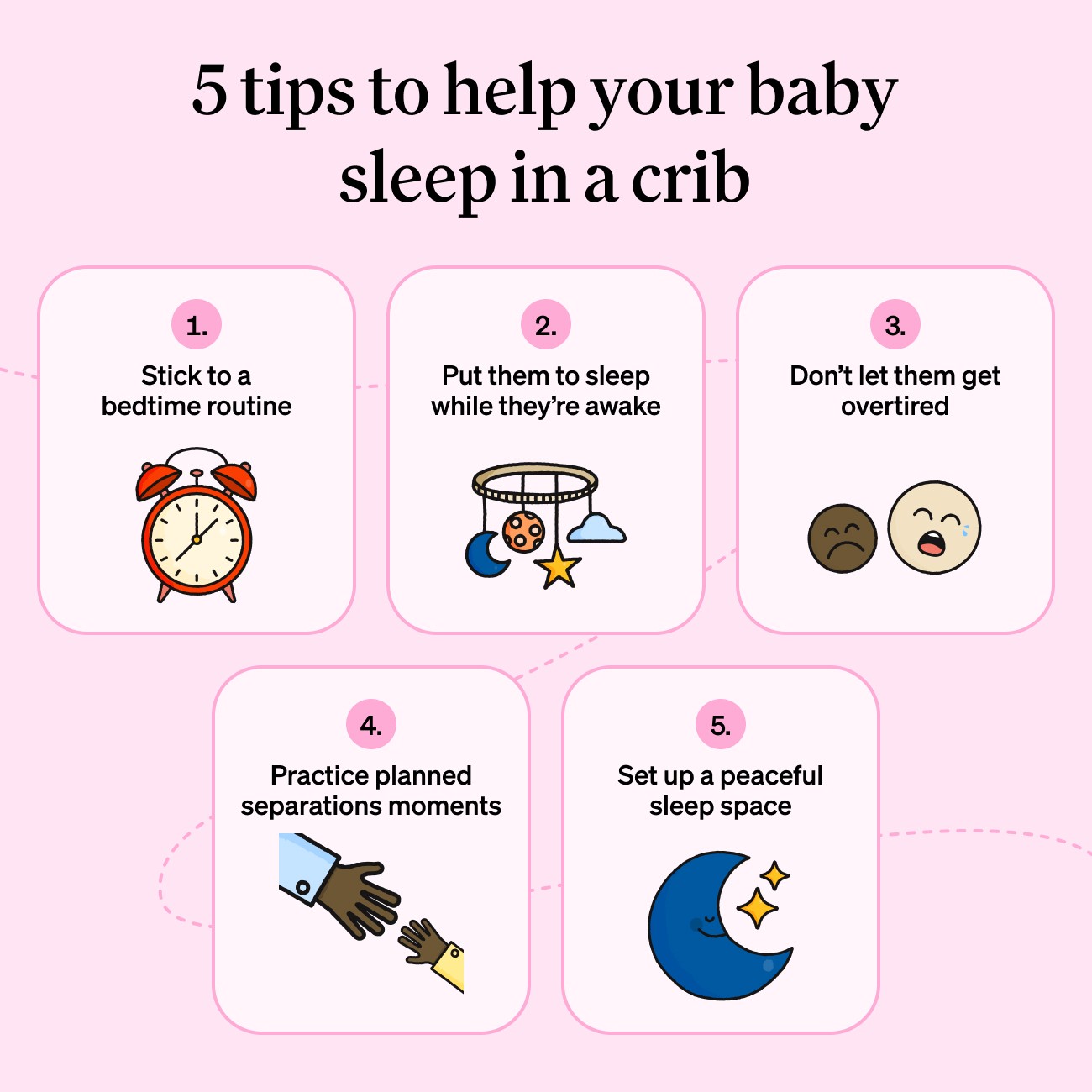
What is the best time to put baby down awake? The goal is to place your baby in the crib when they are drowsy but still fully awake. This usually happens about 10 to 20 minutes after you start your bedtime routine. If you wait too long, your baby may become overtired and resist sleep. If they are not tired enough, they may just lie there staring. Watch for early tired signs like eye rubbing or a glazed look.
Can I use the 40-second method for naps too? Yes, the 40-second method is effective for both nighttime sleep and naps. Consistency helps your baby learn that the crib is the place for sleep, regardless of the time of day. If your baby wakes up during a nap, try using the method again to help them reconnect sleep cycles without picking them up immediately.
How long does it take for a baby to learn to sleep in the crib? Most babies adjust to sleeping in the crib within one to two weeks if the routine is consistent. The first few nights may involve more crying as your baby learns the new skill. Stick to the 40-second method and a calming bedtime routine. Over time, the crib becomes a signal for sleep rather than a source of anxiety.
No comments yet. Be the first to share your thoughts!